Choosing the right pump repair partner can protect production, energy budgets, and customer commitments. For global buyers, the decision involves more than price, location, or a polished website. It requires evidence of technical skill, documented procedures, genuine parts access, and dependable communication across borders.
The U.S. Department of Energy’s Improving Pumping System Performance sourcebook notes that pumping systems can represent a significant share of industrial electricity use, often reaching 25% to 50% in some facilities. Poor alignment, worn seals, cavitation, and incorrect impeller sizing can quietly increase that burden. A qualified pump repair provider should therefore inspect vibration, shaft condition, bearing temperature, hydraulic performance, and motor compatibility. Reports should include measurements, photographs, replaced components, and test results. Clear evidence matters.
This guide reviews seven pump repair services for international buyers, using practical criteria rather than marketing claims. These criteria include experience with centrifugal, positive-displacement, submersible, and API-related equipment. They also include workshop capacity, emergency response, warranty terms, export documentation, and compliance with recognized standards such as ISO 9906 and API 610 where applicable. The International Energy Agency continues to identify motor-driven systems as important energy-efficiency opportunities, making repair quality an operational issue, not merely a maintenance expense. No ranking is perfect. Service quality can vary by country, technician, and spare-parts availability. Buyers should verify references, audit reports, lead times, and after-sales support before signing. A repaired pump may look ready on the bench, yet fail quickly under heat, pressure, or contaminated fluid. That detail deserves attention.
7 Best Pump Repair Services for Global Buyers?
Global pump repair decisions should begin with documented competence, not attractive turnaround promises. ISO 9001 indicates a controlled quality management system, covering procedures, inspections, corrective actions, and customer records. It does not automatically prove technical repair capability. Buyers should review the certificate scope and audit evidence.
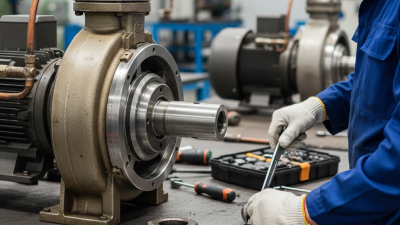
For centrifugal pumps serving demanding industrial duties, API 610 alignment can reveal deeper workshop discipline. Ask whether technicians understand rotor balance, shaft runout, casing tolerances, mechanical seals, and performance testing. ISO 5199 provides another useful benchmark for centrifugal pump design and technical requirements. A capable service center should record vibration readings, pressure results, material grades, and final clearances. Photos help.
Small details matter.
Global buyers should request calibration certificates for measuring equipment, traceability for replacement parts, and a clear nonconformance process. Experienced providers can explain how they isolate cavitation damage, bearing wear, corrosion, or misalignment. They should also confirm packing standards, export documents, warranty terms, and local safety requirements before shipment. Remote inspections can improve trust, but they cannot replace physical verification.
A difficult point deserves attention: ISO references may be misunderstood or overstated. Some workshops use compliant procedures without holding every relevant certification. That is not automatically unacceptable, but the difference must be disclosed. Ask for repair examples, test reports, technician qualifications, and customer references from similar pump applications. The strongest service choice combines practical repair evidence, independent verification, and honest limits. Mistakes still happen. Good systems make them visible and correctable.
| Rank | Repair Service Type | Typical Pump Scope | Core Technical Work | Relevant Benchmark | Best Fit for Global Buyers | Recommended Acceptance Records |
|---|---|---|---|---|---|---|
| 1 | Centrifugal Pump Overhaul | Single-stage and multistage centrifugal pumps used in water, industrial, energy, and process applications. | Disassembly, shaft and sleeve inspection, bearing replacement, mechanical-seal replacement, impeller refurbishment, reassembly, and performance testing. | ISO 9001 for quality-management processes; ISO 5199 for applicable centrifugal-pump technical requirements. | General industrial buyers requiring a documented, repeatable repair process. | Inspection report, dimensional report, material certificates where required, seal data, balance report, and final test record. |
| 2 | API-Grade Process Pump Repair | Centrifugal pumps operating in petroleum, petrochemical, and natural-gas service. | API-oriented inspection, rotor examination, wear-ring and seal review, shaft repair assessment, controlled assembly, and documented testing. | API 610, which specifies requirements for centrifugal pumps used in petroleum, petrochemical, and natural-gas industries; ISO 9001 quality controls. | Refineries, chemical plants, gas-processing facilities, and EPC projects with strict documentation requirements. | Traceability records, inspection and test plan, nonconformance record, repair procedure, calibration certificates, and signed release dossier. |
| 3 | Submersible and Dewatering Pump Repair | Submersible drainage, sewage, construction, mining, and wastewater pumps. | Motor insulation testing, cable and connector inspection, moisture detection, seal replacement, impeller cleaning, and electrical safety checks. | ISO 9001 process control; applicable electrical, lifting, ingress-protection, and local safety requirements should be specified in the purchase order. | Mining, construction, municipal wastewater, flood control, and rental fleets. | Insulation-resistance results, winding report, seal test, cable inspection, earth-continuity record, and functional run test. |
| 4 | Positive-Displacement Pump Rebuild | Gear, screw, lobe, piston, plunger, and diaphragm pumps used for viscous or metered fluids. | Gear or rotor inspection, valve and diaphragm replacement, cylinder or chamber refurbishment, relief-system checks, and flow verification. | ISO 9001 quality controls; application-specific pressure, materials, and safety requirements must be confirmed against the pump design and fluid service. | Chemical dosing, food processing, oil transfer, polymer handling, and high-viscosity applications. | Pressure test, relief-valve verification, leakage report, capacity test, elastomer compatibility record, and material traceability. |
| 5 | Magnetic-Drive and Sealless Pump Service | Sealless pumps for corrosive, toxic, volatile, or leakage-sensitive liquids. | Containment-shell inspection, magnet-capsule examination, bushing replacement, corrosion assessment, alignment checks, and leak testing. | ISO 9001 quality-management controls; chemical compatibility and containment requirements must be verified for each process fluid. | Chemical processing, semiconductor manufacturing, pharmaceutical production, and hazardous-fluid transfer. | Containment test, corrosion review, component inspection, cleanliness record, pressure or leak-test certificate, and assembly checklist. |
| 6 | Vacuum Pump Repair and Reconditioning | Rotary vane, liquid-ring, dry-running, and other industrial vacuum-pump configurations. | Rotor and vane inspection, clearances review, oil-system service, seal replacement, contamination removal, and vacuum-performance testing. | ISO 9001 process control; test methods and acceptance limits should be agreed using the pump design data and operating conditions. | Packaging, food processing, electronics, laboratories, metallurgy, and industrial drying systems. | Ultimate-vacuum test, leak test, oil analysis where relevant, vibration record, motor test, and operating-condition report. |
| 7 | On-Site Pump Diagnostics and Predictive Repair | Installed pumps where removal would cause significant production loss or logistical cost. | Vibration analysis, thermography, alignment verification, lubrication assessment, operating-point review, and repair-or-replace recommendations. | ISO 9001 service procedures; API 610 or ISO 5199 requirements apply when the inspected pump falls within those equipment scopes. | Remote sites, power and utility plants, mining operations, water infrastructure, and continuous-process facilities. | Baseline vibration data, alignment report, thermographic images, root-cause analysis, risk ranking, and corrective-action plan. |




sale@harbertpump.com,
sale@harbertpump.com,
sale@harbertpump.com,
sale@harbertpump.com,
sale@harbertpump.com