
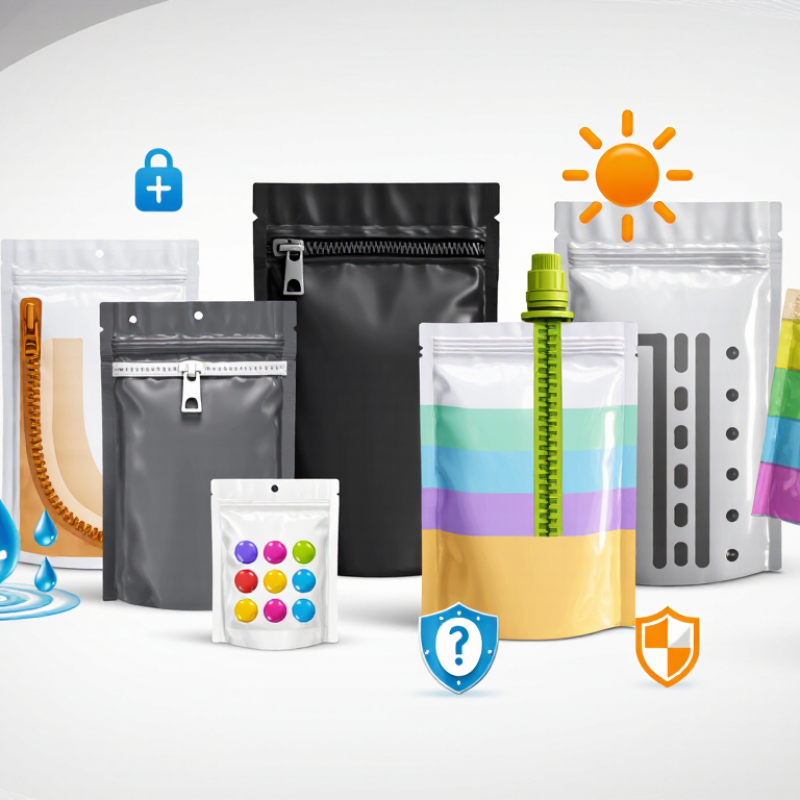
7 Tips to Choose the Right Stand Up Pouch
Choose Zippers, Spouts, and Seal Widths for Product Functionality
A stand up pouch should match how consumers open, pour, reseal, and store the product. The Flexible Packaging Association reported about $40.3 billion in U.S. flexible packaging sales in 2023. Food remains a major application. That scale shows why small closure decisions deserve technical testing, not guesswork.
Tip 1: Match the zipper to product texture. Fine powders may enter the track and reduce closure reliability.
Tip 2: Check zipper force with real users. A strong zipper can frustrate children, older adults, or people with limited grip strength. It may also damage the pouch during repeated opening.
Tip 3: Select a spout diameter based on flow behavior. Thick sauces need wider openings than liquid supplements.
Tip 4: Test the spout angle and cap tether during pouring. A cap that rolls away is a minor detail until the product is used outdoors.
Tip 5: Confirm chemical compatibility between the product, cap, and film. Lab results can differ from actual storage conditions. Smithers’ stand-up pouch market research highlights convenience and resealability as continuing growth drivers, but performance depends on the complete package system.
Tip 6: Choose seal widths according to filling speed, pressure, and product contamination risk. Wider seals can provide more tolerance, but they consume usable package space.
Tip 7: Run drop, leak, vibration, and repeated-opening tests. I have seen attractive samples fail after transport.
This choice is easy to underestimate. Do not approve a pouch from appearance alone. Record seal temperature, dwell time, and pressure during trials, then review failures honestly.