How to Choose the Right Domestic Water Pump?
Choosing the right domestic water pump begins with a clear picture of daily water use. A quiet apartment bathroom needs different performance from a three-storey home with garden irrigation. Count the outlets, measure the distance, and note the highest tap. Small details matter.
Dr. Lev Nelik, a recognized pump-industry specialist, explains, “A pump does not operate alone; it operates as part of a system.” This practical view should guide every buying decision. A domestic water pump must match required flow, total head, pipe size, water temperature, and electrical supply. A powerful model may seem attractive. However, oversized equipment can waste energy, create pressure surges, and cycle too often. That shortens service life.
Check the pump curve, not only the box label. Look for performance at your actual operating point. A shower may feel weak when the pump cannot overcome vertical lift and pipe resistance. A basement installation may need protection against dry running. Stainless steel components can help in demanding environments, while automatic controls improve convenience. Noise also matters, especially beside bedrooms.
Reliable selection is rarely perfect on the first attempt. Household habits change. Filters clog. Older pipes may restrict flow. Leave some capacity, but avoid buying far beyond the real requirement. Ask a qualified installer to verify the calculations and electrical protection. The best domestic water pump is not simply the largest or cheapest model. It is the one that delivers steady pressure, reasonable energy use, safe operation, and dependable service in your actual home.
Define Household Demand: 1 US gpm = 3.785 L/min at Peak Use
How to Choose the Right Domestic Water Pump?
Define Household Demand: 1 US gpm = 3.785 L/min at Peak Use
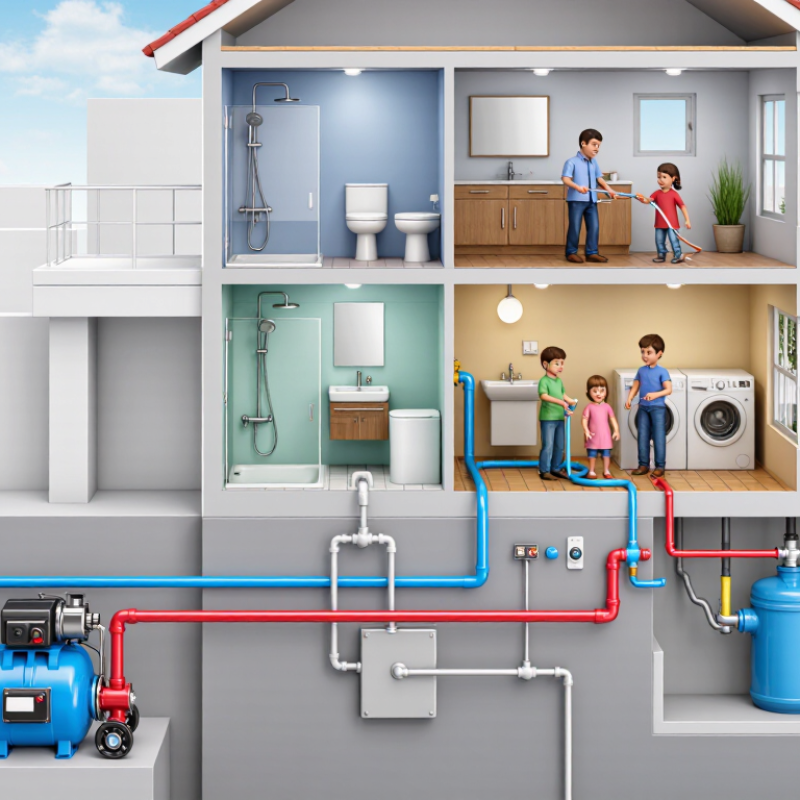
Choosing a domestic water pump starts with actual household demand, not the largest pump available. One US gallon per minute equals 3.785 liters per minute. At peak use, a shower may require 2–3 gpm, while a kitchen tap may need 1–2 gpm. If two showers and a washing machine operate together, demand can quickly exceed 6 gpm, or about 22.7 L/min. Measure your home’s busiest period when possible. Guessing often creates weak pressure or unnecessary energy use.
Pump performance also depends on lifting height, pipe length, bends, filters, and tank pressure. A pump delivering 8 gpm at the outlet may provide much less after these losses. Check the performance curve, not only the maximum flow figure. A practical sizing method adds the expected peak flow, then checks the required pressure at the highest fixture. Local plumbing professionals can verify these calculations, especially for multi-story homes. Small errors matter.
Tips: List every fixture, estimate its flow, and identify which fixtures may run together. Keep a simple record for one week. It may reveal that peak demand is lower than expected. However, household routines change, so leaving a modest safety margin is sensible. Oversizing still deserves caution. Bigger is not automatically better.
Calculate Total Head: 1 bar ≈ 10.2 m of Water Head, Plus Losses
How to Choose the Right Domestic Water Pump?
Choosing a domestic water pump starts with total head, not horsepower. Total head combines vertical lift, required outlet pressure, pipe friction, and fittings. One bar of pressure equals approximately 10.2 metres of water head. Therefore, a required 2-bar outlet pressure represents about 20.4 metres of head.
Measure the height from the water source to the highest outlet. Then add pressure requirements at that outlet. For example, a house may need 8 metres of lift and 20.4 metres for 2 bar pressure. If pipework, elbows, valves, and filters add 6 metres of loss, the pump should provide roughly 34.4 metres of total head at the intended flow rate. Losses grow when pipes are narrow or flow becomes faster.
Do not select a pump using its maximum head alone. That figure may describe zero flow, which is useless at a running tap. Check the pump curve and find the point where flow and head meet. In field installations, I have seen calculations fail because a filter was ignored. I have also underestimated old pipe resistance. Measure carefully, then leave a modest allowance without oversizing the pump. Too much pressure can cause noise, leaks, and unnecessary energy use.
Check Potable-Water Compliance: NSF/ANSI 61 and IEC 60335-2-41
Choosing the right domestic water pump requires more than checking flow rate and pressure. Potable-water compliance matters because water contacts internal materials, seals, and coatings. NSF/ANSI 61 evaluates these materials for potential health effects in drinking-water systems. It does not simply confirm that a pump performs well.
Check the certification scope carefully. It should cover the wetted components and the intended water temperature. A certificate for one seal may not cover the complete pump assembly. I have seen installations where the pump carried a compliance mark, but a replacement gasket did not. That small detail deserved more attention. Ask for current certificates, test conditions, and material information. Do not rely on a catalog image.
IEC 60335-2-41 focuses on the safety of electrically operated pumps for liquids. It addresses risks involving insulation, leakage current, overheating, and mechanical construction. Check whether the tested configuration matches your voltage, installation method, and operating environment. Electrical protection matters. A pump may meet one standard while lacking evidence for the other. Keep both records with the installation documents, and review them again when changing seals, cables, or control equipment.
Compare Efficiency, Noise, Controls, NPSH, and Maintenance Requirements
How to Choose the Right Domestic Water Pump?
Choosing a domestic water pump requires more than comparing flow rates. Check efficiency at your normal demand, not only at the maximum rating. A pump operating near its best efficiency point usually uses less electricity and produces steadier pressure. Noise also matters. A pump beside a bedroom can turn every shower into a disturbance. In a basement, vibration may travel through concrete and pipe supports. Rubber mounts and flexible connectors can help, but poor installation still creates noise.
Controls should match the household. Variable-speed control can maintain stable pressure when one tap opens or several showers run together. Simpler pressure switches cost less and may be easier to repair. NPSH deserves careful attention, especially with shallow tanks or long suction pipes. Insufficient available NPSH can cause cavitation, producing a harsh rattling sound and damaging the impeller. I have seen a pump blamed for low flow when a clogged inlet screen was the real problem. A clean specification sheet is not enough.
Tips:
Measure pipe length, elevation, and expected flow before selecting the pump. Leave access for cleaning filters and checking seals. Ask how often the unit needs inspection, and whether replacement parts are locally available. Keep a simple maintenance record. It takes minutes. During testing, listen for unusual cycling, air leaks, or pressure fluctuations. My own selection process is not perfect; I sometimes weigh quiet operation too heavily and overlook service access. That mistake becomes expensive when the pump is installed behind fixed cabinets.