The 2026 search for the best Insulation Wrapping Machine is not just about speed. Buyers need consistent wrapping, reliable controls, and service support that remains available after installation. The International Energy Agency’s 2023 Buildings report says buildings account for about 30% of global final energy consumption and 26% of energy-related emissions. That context makes insulation quality important, although a wrapping machine alone cannot guarantee building efficiency.
For global buyers, compare machines against the actual product and production line. Check compatible insulation materials, roll widths, wrapping tension, changeover time, and finished-package dimensions. Ask suppliers for sample runs, cycle-time evidence, and clear maintenance requirements. A machine that performs well with one material may need adjustment for another. Small details matter. Examine guarding, operator access, electrical specifications, and spare-parts availability for the destination site. These checks help distinguish documented capability from brochure claims.
The IEA figures describe buildings, not machine sales or insulation demand. Keep that distinction clear. Supplier claims also deserve verification through trials and references from comparable plants. No machine is perfect. A lower purchase price may bring longer changeovers or harder-to-source parts; a faster line may not suit every product. This guide compares practical selection criteria for 2026, helping buyers weigh output, product consistency, service, and total operating cost before choosing an Insulation Wrapping Machine.
2026 Best Insulation Wrapping Machine for Global Buyers?
What Is an Insulation Wrapping Machine, and Where Is It Used?
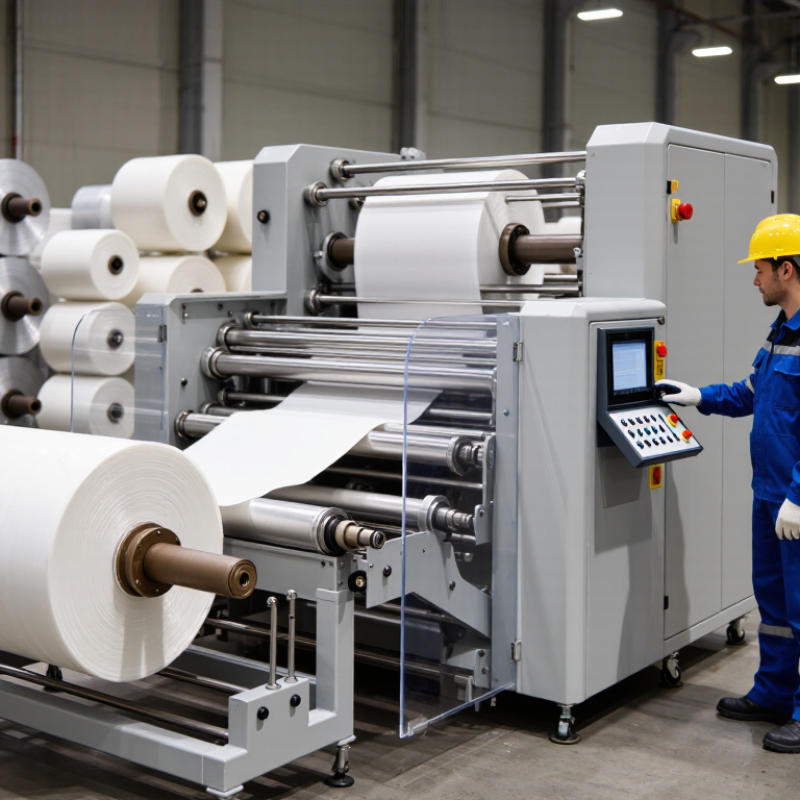
An insulation wrapping machine applies or secures insulation around products such as pipes, cables, and components. Depending on its design, it may feed material, control tension, overlap edges, and cut the wrap to length. Some machines handle protective outer layers rather than the insulation itself, so check the process carefully. Fit matters.
These machines are used in HVAC and refrigeration production, building-material workshops, and industrial pipe or cable manufacturing. A wrapped pipe section may need consistent coverage to reduce gaps and help protect the insulation during handling. On a production line, repeatable tension and wrap width can reduce variation between units. But results still depend on the material, operator setup, and product shape.
Tips: Confirm the machine supports your insulation’s thickness, width, and surface type. Ask for a trial using your actual product, and inspect seams, wrinkles, and cut edges. Not every line needs automation; for short runs, setup time may outweigh speed gains. That trade-off deserves a careful look.
An insulation wrapping machine coordinates three actions: feeding tape, maintaining tension, and rotating the product or wrapping head. Tape travels from its roll across guide rollers toward the insulation. Keep the edges aligned. A tilted roll can cause gaps or uneven overlap, especially on narrow cables. Operators should check the tape path and match feed speed to line speed. It sounds simple. In practice, roll diameter changes as tape is used, which can affect feeding.
Tension may be controlled by a brake, dancer arm, or electronic drive, depending on the machine. Too little tension can leave loose folds; too much may stretch the tape or compress soft insulation. Run a short test and inspect the turns for consistent overlap and surface damage.
One detail is easy to miss: the edges can look even while tension varies underneath. Check again after changing tape width, roll size, or line speed.
2026 Best Insulation Wrapping Machine for Global Buyers?
Tape width affects coverage and overlap. A wider tape can reduce winding turns, but it may wrinkle on narrow parts. Check the usable width range against your insulation material and smallest workpiece. Part diameter matters just as much: confirm both minimum and maximum sizes, including fittings or flanges. Measure real production parts, not only drawings. Small details matter.
Speed is usually listed as a headline figure, yet stable wrapping matters more. Ask whether the stated rate applies to your part length, tape width, and chosen overlap. Tension should keep the tape snug without crushing soft insulation or stretching its backing. If possible, run a sample using your actual materials. Watch the tape edges and inspect the finish after handling. One trial is not enough, though; repeat it with different operators.
Tips: Record diameter, tape width, overlap, and line speed during each test. Compare finished samples under the same lighting. A slightly slower setting may give more even coverage. And yes, that can be frustrating when output targets are tight. The best specification is the one your team can reproduce across routine shifts.
For buyers assessing insulation wrapping machines, safety should be visible in the machine’s layout, not buried in a manual. ISO 12100:2010 sets out a three-step risk-reduction method: inherently safe design, safeguards and complementary measures, then information for use. The order matters. A warning label cannot fix a reachable nip point between feed rollers.
On a wrapping line, designers should examine roll loading, film or insulation feeding, cutting, and jam clearing. Can the cutter sit behind a fixed guard? Can hazardous motion stop when an interlocked access door opens? Emergency stops help, but they do not replace guarding. This sounds tidy on paper. In real production, operators may still reach around a guard to clear a stubborn fold. That deserves another risk review.
The U.S. Bureau of Labor Statistics reported about 2.6 million nonfatal workplace injuries and illnesses in private industry during 2023, in its Survey of Occupational Injuries and Illnesses. This is not a machine-specific figure, but it shows why practical controls matter. Buyers can ask suppliers for risk-assessment records, guard and interlock details, and clear instructions for setup and cleaning. Then check the machine in operation, with actual material loaded. A checklist helps, though it can miss awkward tasks. Safety improves when operators can point out those moments before purchase.
Buyer comparison guide: The operating ranges below are indicative screening benchmarks for insulation roll or blanket wrapping equipment, not specifications for a particular machine. Actual suitability depends on the product, packaging material, line layout, and a documented risk assessment.
| Evaluation dimension | Indicative buyer benchmark | ISO 12100 risk-reduction link | What to verify before purchase |
|---|---|---|---|
| Machine configuration | Choose a roll wrapper, flow wrapper, or integrated wrapping line according to product shape, required containment, and upstream/downstream handling. | Step 1 — Inherently safe design: Prefer a layout that reduces exposed nip points, unnecessary manual handling, and access to moving parts. | Request a process layout showing operator stations, material loading points, maintenance access, and interfaces with conveyors or other equipment. |
| Product size and range | Define minimum and maximum product width, diameter, length, and mass from the actual product range; there is no universal size range for all insulation wrappers. | Step 1: Suitable guides and adjustable supports can reduce awkward handling and the chance of product jams. | Provide representative product samples or drawings. Confirm changeover limits, adjustment method, and how jams are cleared safely. |
| Throughput and line speed | Specify required good units per minute and normal shift pattern. Validate the rate using the intended product, film, operator tasks, and upstream feed conditions. | Steps 1 and 2: A controlled feed and guarded moving zones can reduce contact risks without relying only on operator attention. | Ask for a witnessed acceptance test with agreed products and packaging materials. Check safe access during setup, stoppages, and routine cleaning. |
| Packaging material | Confirm compatibility with the proposed film or other wrapping material, including roll dimensions, sealing requirements, and product protection needs. | Step 1: Design roll holders and threading points to limit lifting strain and access to hazardous motion where practicable. | Review loading height, roll weight, threading instructions, hot-seal areas if fitted, and the safe method for replacing material rolls. |
| Operator guarding and access | Moving rollers, belts, cutters, and sealing units may create mechanical or thermal hazards, depending on machine design. | Step 2 — Safeguarding and complementary measures: Use suitable fixed or interlocked guards and other protective measures for hazards that cannot be eliminated by design. | Request guard drawings, access-point details, interlock descriptions, and an explanation of how protection is maintained during production and setup. |
| Emergency stopping | Emergency-stop devices should be accessible from relevant operator positions and clearly identified; they are not a substitute for guarding. | Step 2: Emergency stopping is a complementary protective measure. The risk assessment should determine the required safety-related control functions. | Check device locations, reset behavior, stop and restart logic, and test results. Confirm that resetting an emergency stop does not itself restart the machine. |
| Electrical and energy isolation | Identify electrical, pneumatic, hydraulic, thermal, and stored-energy sources that may be present on the selected configuration. | Steps 1 and 2: Reduce energy-related hazards through design and provide appropriate isolation or protective measures for servicing. | Request electrical documentation, isolation-point identification, and maintenance procedures for safe isolation and release of stored energy. |
| Controls and safety functions | Control architecture and safety-function performance should be selected from the machine risk assessment; no single performance level applies to every wrapper. | Step 2: Protective control functions should be designed and validated to suit the assessed risk and applicable requirements. | Ask for the risk assessment, safety-function descriptions, validation evidence, and instructions for testing protective devices. |
| Setup, cleaning, and jam clearing | These tasks can expose people to hazards that are absent or controlled during normal automatic operation. | Steps 1 and 2: Minimize hazardous interventions by design; provide appropriate access controls and safe operating modes where needed. | Review task-specific procedures, required tools, access arrangements, and measures for preventing unexpected startup during intervention. |
| Instructions and residual risks | Documentation should cover intended use, foreseeable misuse, installation, operation, maintenance, and remaining risks. | Step 3 — Information for use: Communicate residual risks through instructions, warnings, and training after design and safeguarding measures have been applied. | Confirm that manuals and safety labels are available in the languages required for the destination market and match the delivered machine configuration. |
| Global installation and compliance | Electrical supply, workplace rules, import requirements, and conformity obligations vary by destination and machine configuration. | All three steps: ISO 12100 provides a risk-assessment and risk-reduction framework; it does not by itself establish that a specific machine meets every local legal requirement. | Identify the destination countries early. Obtain applicable conformity documents, installation requirements, and evidence relevant to the machine and market. |
Selection principle: Compare machines on demonstrated product compatibility, safe access, maintainability, documented risk reduction, and verified performance—not on nominal speed alone. ISO 12100 calls for risk reduction in the order of inherently safe design, safeguarding and complementary protective measures, then information for use.
For an insulation wrapping machine, IEC 60204-1’s 1,000 V AC limit describes the standard’s electrical scope; it is not a blanket safety rating. Check the machine’s nameplate for nominal voltage and frequency, then compare them with your site supply.
Confirm the machine’s electrical documentation identifies the incoming supply point and clearly shows wiring, protective devices, and earthing connections.
Small details matter.
A control panel’s supply may differ from a heater or drive circuit, so ask how each circuit is protected and labeled.
During a factory review, inspect the protective bonding connections, cable entries, terminal covers, and accessible electrical enclosures.
Ask for test records, including protective-circuit continuity results, and confirm the emergency-stop and isolation arrangements match the documented design.
These checks help reveal practical issues, such as loose cable glands or unclear terminal markings.
Not always obvious.
Request the applicable IEC 60204-1 edition and a written assessment for the machine configuration and destination market.
The voltage limit alone does not establish conformity, and local requirements may affect installation. A checklist helps, but it cannot replace a competent technical review.
sale@harbertpump.com,
sale@harbertpump.com