
Global buyers are entering 2026 with a wider choice of Aluminum Extrusion profiles, alloys, finishes, and manufacturing methods. Demand is expanding across electric vehicles, solar frames, industrial automation, construction, and thermal management. Grand View Research identifies the global aluminum extrusion market as a sustained growth sector through 2030. Its analysis highlights transportation, building systems, and industrial applications as major demand areas.
The International Aluminium Institute also reports rising long-term aluminum demand, supported by lightweight design and the transition toward lower-carbon infrastructure. These trends explain why buyers now compare more than price. Alloy selection, dimensional tolerance, wall thickness, surface treatment, and shipment reliability can change the real project cost. A 6063 architectural profile may suit a window frame, while 6061 offers stronger performance for machine structures. The difference is practical: one may prioritize finish quality, while the other must withstand repeated loads.
Details matter. Not every profile wins.
This guide examines the top types of Aluminum Extrusion expected to attract global purchasing attention in 2026. It considers standard shapes, custom profiles, heat sinks, structural sections, and systems for solar and electric mobility. Industry forecasts are useful, but they are not perfect purchasing instructions. Regional energy prices, recycled content requirements, certification rules, and tooling capacity can alter supplier performance. Buyers should verify mill certificates, inspection records, alloy temper, and packaging conditions before approval.
A reliable decision also requires practical experience. A polished sample can hide weak tolerances. A low quoted price can exclude tooling, anodizing, testing, or inland delivery. This overview connects market evidence with those on-site realities, helping international buyers evaluate extrusion options with greater confidence and fewer assumptions.
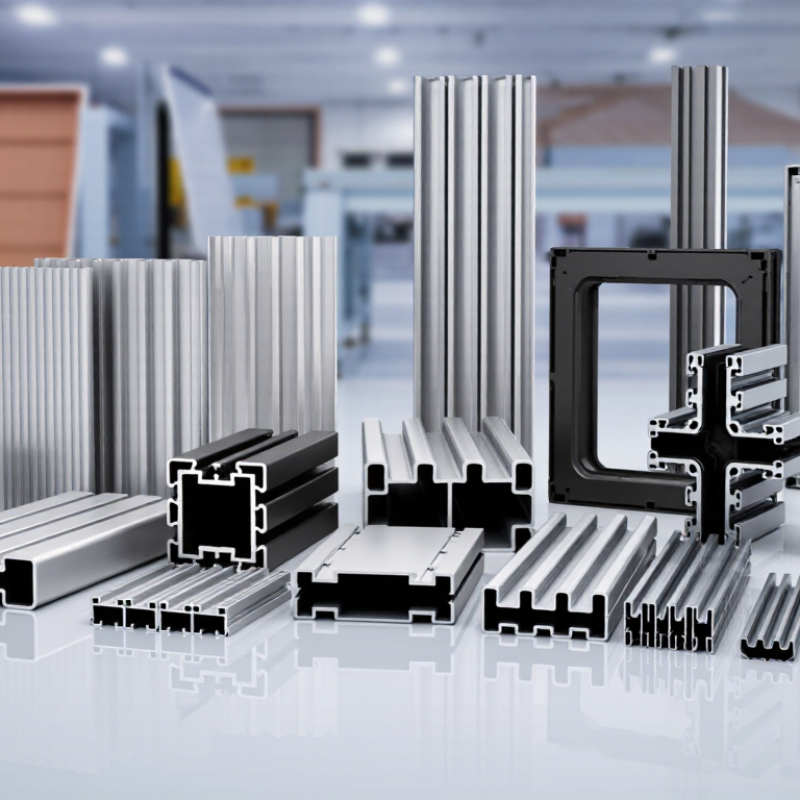
Aluminum extrusion begins with a heated billet pressed through a shaped die. The result is a continuous profile with consistent dimensions and clean geometry. Common types include standard channels, custom hollow sections, structural frames, and finned heat sinks. Each type serves a different purpose. Hollow profiles reduce weight, while thicker walls improve load resistance.
Global buyers choose aluminum because it combines low density, corrosion resistance, and practical recyclability. It also supports cutting, drilling, bending, and surface finishing after extrusion.
Alloy and temper matter greatly. For example, a frame profile may need different strength than a heat-transfer component.
A profile can look perfect, yet fail if its tolerance is poorly controlled. I have seen small dimensional errors complicate assembly and increase machining time.
Tips: Confirm the alloy, temper, wall thickness, tolerance, and finish before ordering. Request sample profiles and inspection records. Check straightness with a simple surface test. Discuss packaging for long-distance transport, because damaged corners are difficult to repair. Do not choose the lowest quoted price automatically. Tooling, testing, and consistent production often affect the real cost. Even experienced buyers sometimes overlook this point.
Aluminum extrusion profiles are shaped for different engineering and construction needs. Standard profiles include angles, channels, bars, tubes, and rectangular sections. They suit frames, supports, guards, and basic assemblies. Their dimensions are usually easier to source and inspect.
Architectural profiles create clean lines for doors, windows, partitions, ceilings, and curtain walls. Industrial profiles often include T-slots, allowing brackets and panels to connect without extensive welding.
Heat sink profiles use thin fins to increase surface area and release heat from electronic equipment. Tubular profiles offer strength with lower weight, especially in transport frames and machinery covers.
Custom profiles can combine several functions, but they require accurate drawings, suitable dies, and careful quantity planning.
Tips: Confirm the alloy, temper, wall thickness, and tolerance before ordering. Ask for sample measurements and surface-finish details. A profile may look correct but fail after cutting or assembly. Keep packaging requirements clear, especially for long sections crossing several climates.
Experienced buyers also check straightness, corner radius, anodizing consistency, and cut-end quality. Alloy selection matters. A strong alloy may be harder to machine, while a softer grade may dent during shipping. No profile is perfect. The best choice balances load, appearance, fabrication, availability, and total landed cost. In practice, small design changes can reduce scrap, but this is often overlooked. Reliable suppliers should provide inspection records and communicate limitations before production begins.
Global buyers usually compare aluminum extrusion by alloy, temper, and real service conditions. Alloy chemistry sets the starting point. Temper controls the final balance between strength, ductility, and dimensional stability.
The International Aluminium Institute reported approximately 73 million metric tonnes of global primary aluminum production in 2024. That scale increases supply options, but it also makes consistency a serious purchasing concern. The common 6063-T5 profile offers smooth surfaces and moderate strength for frames, doors, and heat sinks. Its T5 temper means aging occurs after extrusion. In contrast, 6061-T6 receives solution heat treatment and artificial aging. It provides higher strength for brackets, transport components, and structural assemblies. The Aluminum Association’s 2024 Aluminum Standards and Data identifies these temper designations as processing conditions, not alloy grades.
6082-T6 often suits heavier European structural applications, while 6005A-T6 can balance strength, weldability, and extrusion complexity. Yet a neat ranking is misleading. A stronger alloy may extrude less easily, cost more, or show poorer surface quality. A polished 6063 section can outperform a stronger alloy when appearance and corrosion exposure dominate. Buyers should request tensile data, hardness records, dimensional inspection results, and corrosion requirements for each batch. Weaker documentation can quietly erase the expected performance advantage. Tensile strength alone is not enough. Temperature, wall thickness, weld zones, and post-machining can change the final result.
| Alloy / Temper | Typical Product Forms | Typical Ultimate Tensile Strength | Typical Yield Strength | Typical Elongation | Strength Level | Corrosion Resistance | Weldability | Formability and Machinability | Common Global Applications |
|---|---|---|---|---|---|---|---|---|---|
| 6060-T5 | Thin-wall profiles, decorative sections, light frames | Approx. 160–195 MPa | Approx. 120–150 MPa | Approx. 8–12% | Low to medium | Very good in normal atmospheric environments | Very good | Excellent extrusion capability; good surface finish and bending response | Architectural trim, lighting housings, furniture, retail displays and light-duty enclosures |
| 6063-T5 | Architectural profiles, hollow sections, heat sinks | Approx. 145–185 MPa | Approx. 105–145 MPa | Approx. 8–12% | Low to medium | Very good | Very good | Excellent extrusion quality; particularly suitable for anodizing and decorative finishes | Windows, doors, curtain-wall components, handrails, solar-frame parts and consumer products |
| 6063-T6 | Medium-duty structural profiles and precision sections | Approx. 200–245 MPa | Approx. 170–215 MPa | Approx. 8–12% | Medium | Very good | Very good | Good surface appearance; stronger than T5 but generally less formable after aging | Structural architectural systems, machine guards, transport interiors and equipment frames |
| 6061-T6 | Solid bars, tubes, channels, structural profiles | Approx. 260–310 MPa | Approx. 235–275 MPa | Approx. 8–12% | Medium to high | Good; suitable for many outdoor applications | Good, with some strength reduction in the heat-affected zone | Good machinability; moderate extrusion complexity; less decorative than 6063 | Industrial frames, automotive components, marine parts, pressure tubing and general engineering |
| 6005A-T6 | Medium and heavy structural hollow profiles | Approx. 270–315 MPa | Approx. 240–275 MPa | Approx. 8–10% | High | Good | Good; commonly welded in structural assemblies | Higher structural capacity than 6063; extrusion is more demanding than 6063 | Rail vehicles, truck bodies, platforms, ladders, bridges and heavy-duty frames |
| 6082-T6 | Heavy-duty profiles, bars, tubes and machined extrusions | Approx. 290–340 MPa | Approx. 250–310 MPa | Approx. 6–10% | High | Good | Good; post-weld strength is lower than the original T6 condition | Good machining performance; lower surface finish quality than 6063; higher extrusion force | Bridges, cranes, transport structures, platforms, pressure vessels and industrial machinery |
| 7005-T6 | Structural tubes and lightweight transport profiles | Approx. 350–400 MPa | Approx. 290–350 MPa | Approx. 8–12% | High | Moderate to good; protective finishing may be advisable | Good for a 7xxx alloy; weld design and post-weld properties require attention | More difficult to extrude and finish than 6xxx alloys; useful strength-to-weight ratio | Sports equipment, bicycle frames, transport structures and lightweight welded assemblies |
| 2024-T3 | Specialized solid sections, aerospace-related extrusions and machined stock | Approx. 400–470 MPa | Approx. 270–325 MPa | Approx. 10–18% | High | Fair to limited; usually requires cladding, coating or other protection | Limited compared with 6xxx alloys | Good machinability; relatively difficult to extrude and less suitable for decorative profiles | Aerospace and high-strength components where fatigue performance is important |
| 7075-T6 | Specialized high-strength profiles, bars and precision components | Approx. 500–570 MPa | Approx. 430–505 MPa | Approx. 5–10% | Very high | Fair to limited; stress-corrosion and coating considerations are important | Poor to limited for conventional fusion welding | Difficult to extrude; excellent strength-to-weight ratio but higher processing cost | Aerospace, defense, high-performance machinery and highly loaded lightweight components |
Technical note: Mechanical properties are indicative ranges compiled from commonly published EN and AA alloy data for comparable extrusion products. Actual values depend on product geometry, wall thickness, extrusion ratio, heat treatment, inspection standard and applicable regional specification. Temper designations such as T5, T6 and T3 describe different thermal or mechanical treatment conditions and should be confirmed against the purchaser’s required standard.
Surface finish often determines how aluminum extrusion performs after installation. Mill finish keeps the metal close to its natural appearance and suits protected indoor applications. Anodizing creates a harder oxide layer with silver, bronze, or darker tones. It works well on door frames, trims, and frequently touched surfaces. Powder coating offers broader color choices and stronger visual consistency across architectural components.
Customization begins with the profile design, not the coating line. Buyers can specify wall thickness, hollow chambers, mounting channels, drainage paths, and concealed fasteners. CNC cutting, drilling, tapping, and angled sawing can reduce assembly work. A practical drawing should show critical dimensions and acceptable tolerances. Small changes may prevent expensive tooling revisions. They may also make the profile less attractive. That trade-off deserves honest discussion.
Finish quality depends on more than color selection. Inspectors should check coating thickness, adhesion, gloss, surface scratches, and color variation between production batches. A sample panel is useful, but it cannot represent every corner or recessed area. We once treated a sample as fully representative and overlooked a visible shade difference on a larger run. That mistake changed our checking process. Clean handling, protective film, dry storage, and suitable packaging help preserve the finish during transport. Extrusions should be reviewed under realistic lighting, because a showroom lamp can hide minor defects.
The chart compares representative wall-thickness ranges commonly used for major aluminum extrusion types. Actual dimensions depend on alloy, profile geometry, section size, tooling limits, and required mechanical performance. Typical customization options include mill finish, anodizing, powder coating, PVDF coating, brushing, cutting, drilling, tapping, CNC machining, assembly, and protective packaging.
Choosing an aluminum extrusion starts with the application, not the catalog. A window frame, battery tray, and machine rail need different performance. Alloy 6063 suits clean architectural shapes and smooth anodizing. Alloy 6061 offers higher strength for structural parts. Temper selection matters too. T6 can improve strength, but it may reduce forming flexibility. Small mistakes become expensive after tooling begins.
Ask for drawings in recognized formats and tolerances aligned with ISO 6362, EN 755, or ASTM B221. These standards are not interchangeable in every detail. Confirm wall thickness, corner radius, straightness, and cut-length tolerance before approval. Surface treatment should match the environment. Anodizing works well for appearance and corrosion resistance. Powder coating can provide broader color control. Salt exposure requires closer review.
Sustainability also affects purchasing decisions. The International Aluminium Institute states that recycled aluminum needs about 5% of the energy used for primary aluminum production. That figure supports recycled content, but it does not remove the need for traceability. Request alloy certificates, temper records, recycled-content evidence, and inspection results. The International Energy Agency identifies aluminum as an energy-intensive industrial material, making production electricity an important supply-chain question. A lower-cost profile may carry higher transport or processing costs. I have seen buyers compare price per kilogram, then overlook machining waste. That comparison is incomplete. Sometimes, the “right” extrusion is slightly heavier, but it survives assembly better.
sale@harbertpump.com,
sale@harbertpump.com