Selecting reliable ammonium chloride powder suppliers in 2026 requires more than comparing prices or website claims. Product consistency, documentation, production experience, and responsible business practices matter equally. This guide examines suppliers through a practical purchasing lens, focusing on evidence that buyers can verify.
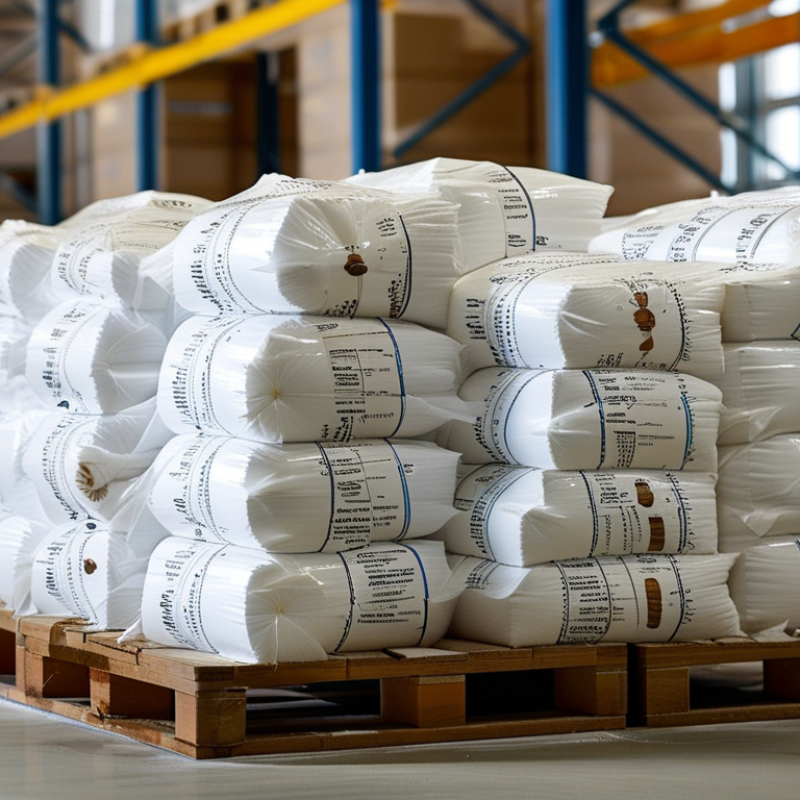
A credible supplier should provide a current specification sheet, safety data sheet, certificate of analysis, and clear batch traceability. These documents should identify purity, moisture, particle size, packaging details, and testing methods. Small details matter. A sealed 25-kilogram bag, readable batch code, and undamaged pallet can reveal careful warehouse control. Supplier experience also deserves attention, especially when serving industrial, agricultural, laboratory, or other permitted applications. However, experience alone does not prove present capability. Production capacity, quality controls, export documentation, and response times may have changed.
Independent audits, recognized management systems, and transparent test records can strengthen confidence. Buyers should also confirm whether the supplier follows applicable chemical safety, labeling, transport, and import requirements in the destination market. Samples and trial orders are useful, but they cannot replace ongoing quality verification. That point is easy to overlook.
This overview does not treat the largest company as automatically the best supplier. A smaller manufacturer may offer stronger communication, while a global distributor may provide better logistics and backup inventory. Rankings can also become outdated quickly. Therefore, the most useful comparison considers product fit, technical reliability, compliance support, delivery performance, and total purchasing risk. Careful verification remains essential before signing a long-term contract.
Ammonium chloride powder is a white, crystalline inorganic salt with a mildly acidic reaction in water. It dissolves readily and may absorb moisture during storage. It is hygroscopic. Dry, sealed packaging helps preserve flow and purity. Heat, humidity, and contamination can change its handling performance, especially in fine powder applications.
Industrial users apply ammonium chloride in nitrogen fertilizer blends, metal surface treatment, dry-cell electrolytes, and approved food-processing processes. Each use requires different specifications. Fertilizer buyers may focus on nitrogen content and particle size. Technical users often request limits for iron, sulfate, heavy metals, and insoluble matter. A reliable supplier should provide a current certificate of analysis, safety data sheet, batch traceability, and clear storage guidance. Sampling still matters. Paperwork alone cannot prove every shipment.
The 2026 market is influenced by agricultural demand, battery production, metallurgy, energy costs, and regional freight conditions. Supply availability can shift when fertilizer output changes or transport routes tighten. Buyers comparing top suppliers should examine production capacity, quality consistency, packaging options, and regulatory documentation rather than price alone. Independent laboratory testing may be sensible for critical applications. Some market reports appear precise, but their regional data can be incomplete. That limitation deserves attention before making a long-term purchasing decision.
Evaluating ammonium chloride powder suppliers in 2026 requires more than comparing quoted prices. Start with the technical specification. Confirm purity, moisture, particle size, appearance, and intended application. A dependable supplier should provide a recent certificate of analysis for every production batch, not a generic document. Check whether an independent laboratory verifies key results. Small differences in moisture can affect storage stability and processing performance.
Traceability deserves close attention. Ask for the manufacturing site, batch number, production date, packaging details, and retention-sample policy. Responsible suppliers should explain how they control contamination and manage nonconforming material. Request safety data sheets and relevant quality certificates. During a supplier audit, inspect clean storage areas, sealed bags, weighing equipment, and documented calibration records. A polished presentation is not enough. Evidence matters more.
Evaluate delivery reliability through a small trial order before signing a long-term agreement. Measure the powder’s condition on arrival, including broken bags, caking, labeling, and actual weight. Review response times when questions arise. Poor communication often appears before larger quality problems. Pricing should include testing, packaging, freight, and possible delays. No supplier is flawless, and an occasional discrepancy may reveal a weak control point. The important issue is how openly the supplier investigates it and corrects the cause. My assessment would remain cautious until several batches show consistent results.
Ammonium chloride solubility rises with temperature, providing a practical reference for checking product identity and batch consistency. When evaluating suppliers, compare the supplied technical data sheet and certificate of analysis with the expected solubility profile, while also reviewing purity, moisture, particle size, packaging, traceability, and quality-control documentation.
Leading ammonium chloride powder suppliers usually fall into three groups: integrated manufacturers, regional producers, and specialty distributors. Each group serves different purchasing needs.
Integrated manufacturers often control raw material sourcing, crystallization, drying, and final screening. This can support stable purity and consistent particle size. Their technical teams may provide certificates of analysis for chloride content, moisture, iron, and insoluble matter.
Regional producers can offer shorter delivery routes and more flexible order volumes. This matters when storage space is limited or demand changes quickly.
Specialty distributors add value through repacking, documentation, and local inventory. Some supply fine powder for laboratory or process applications, while others provide larger granules for industrial handling.
Strong suppliers should explain packaging clearly. Common options include moisture-resistant bags, lined sacks, and palletized shipments. A reliable supplier also records batch numbers and production dates. Ask for recent test results, not only a standard specification sheet.
Production experience helps, but communication matters just as much. No supplier is perfect. Occasional delays, uneven packaging, or slow document responses can still occur.
I would compare sampling procedures, complaint handling, and replacement policies before placing a large order. A practical evaluation may include a small trial batch, visual inspection, sieve testing, and storage checks after several weeks. The best fit depends on purity requirements, particle size, shipment distance, and the supplier’s ability to maintain the same quality over time.
2026 Top Ammonium Chloride Powder Suppliers?
Quality begins with a usable specification, not a polished website. For industrial and fertilizer applications, buyers should request assay, nitrogen content, moisture, insoluble matter, particle size, and heavy-metal results. The 2024 IFA annual report places global fertilizer consumption near 200 million tonnes of nutrients annually. That scale makes batch consistency and traceability important. Each shipment should include a current certificate of analysis, production date, lot number, and tested methods.
Certifications add confidence, but they need careful checking. ISO 9001 supports documented quality systems, while ISO 14001 indicates environmental management practices. Food or pharmaceutical applications may require recognized monographs, HACCP controls, or suitable regulatory declarations. A certificate alone is not proof. Its scope, expiry date, issuing body, and covered facility deserve review. The FAO and WHO JECFA specification identifies ammonium chloride as food additive INS 510, showing why application-specific compliance matters. Requirements can still differ by destination.
Packaging should match storage conditions and handling equipment. Common options include 25-kilogram bags, palletized sacks, and 500 to 1,000-kilogram flexible intermediate bulk containers. Polyethylene liners help limit moisture pickup, while sealed stitching reduces powder leakage. Suppliers should confirm net weight tolerance, pallet dimensions, label language, and loading photos. I would avoid choosing only by the lowest quoted price. That assumption can fail when caking, damaged bags, or incomplete documents delay production. One practical improvement is requesting a small pre-shipment sample, although sampling alone cannot represent every lot.
Anonymous supplier qualification and purchasing benchmark for ammonium chloride powder
| Supplier Qualification Profile | Typical Product Grade | Quality Benchmarks | Relevant Standards or Certifications | Documentation to Request | Packaging Options | Best-Fit Applications |
|---|---|---|---|---|---|---|
| Food-additive qualified supplier | Food grade; white crystalline powder | Ammonium chloride, CAS 12125-02-9; formula NH₄Cl; molecular weight 53.49 g/mol; assay and impurity limits must match the applicable food specification | INS 510; E510 in the European Union; ISO 22000 or FSSC 22000; HACCP; Halal or Kosher where required | Batch COA, food-contact or food-safety declaration, allergen statement, GMO statement, SDS, traceability record, and microbiological statement where applicable | 25 kg multi-wall paper sack with inner liner; 25 kg PP woven bag with PE liner; 500–1,000 kg flexible intermediate bulk container subject to approval | Food processing, yeast nutrient, and regulated food formulations |
| Pharmaceutical or excipient-qualified supplier | Pharmaceutical grade manufactured under controlled GMP conditions | Conformance to the current applicable pharmacopoeial monograph; controlled identification, assay, loss on drying or water, residue, and elemental impurity testing | USP–NF, Ph. Eur., or another accepted pharmacopoeia when specifically claimed; GMP; ISO 9001; regulatory registration as applicable | Pharmacopoeial COA, GMP certificate, change-control policy, declaration of elemental impurities, residual solvents statement, stability or retest information, and audit package | Sealed 5 kg or 25 kg fiber drum; double PE bags; tamper-evident inner packaging; palletized export cartons or drums | Pharmaceutical preparations and applications requiring pharmacopoeial control |
| High-purity industrial supplier | Industrial or technical grade; white to off-white crystalline powder | Common commercial assay range is approximately 98.5–99.5%; confirm chloride, sulfate, iron, heavy metals, moisture, insoluble matter, and particle-size requirements by contract | ISO 9001; ISO 14001 and ISO 45001 may support environmental and occupational-management requirements; REACH status should be verified for the destination market | COA, SDS, technical data sheet, REACH or local chemical-registration statement, origin declaration, lot traceability, and inspection report if required | 25 kg PP woven bags with PE liners; 25 kg kraft paper bags; 500–1,000 kg FIBCs; bulk delivery only after moisture and unloading controls are confirmed | Metal treatment, soldering or galvanizing flux, chemical processing, and laboratory or process use |
| Fertilizer-grade supplier | Fertilizer grade; powder, granular, or prilled form depending on the production line | Nitrogen content is commonly declared at approximately 25–26% nitrogen; chloride content and particle size should be verified against the importing country’s fertilizer rules | Applicable national fertilizer legislation; ISO 9001 is commonly used for quality management; product registration may be required before sale in some jurisdictions | Fertilizer COA, nutrient declaration, SDS, product registration evidence where applicable, batch traceability, and certificate of origin | 25 kg or 50 kg woven bags; 500–1,000 kg FIBCs; bulk shipment for large agricultural contracts | Nitrogen and chloride fertilizer programs, subject to crop and soil suitability |
| Low-metal or electronics-process supplier | High-purity process grade with tighter trace-metal controls | Customer-specific limits for iron, copper, lead, nickel, sodium, potassium, sulfate, insoluble matter, moisture, and particle-size distribution | ISO 9001; documented clean-handling procedures; customer-specific quality agreement; ISO/IEC 17025 laboratory testing where required | Lot-specific trace-metal COA, analytical method references, laboratory accreditation details, contamination-control plan, SDS, and change-notification procedure | Double-bagged 5 kg or 25 kg packs; sealed fiber drums; moisture-barrier outer packaging; dedicated or cleaned pallets | Specialty chemical processing and applications with stringent contamination limits |
| Export-oriented contract supplier | Grade selected according to destination regulations and end use | Stable batch-to-batch assay, moisture protection, defined particle-size range, export labeling, and documented production capacity | ISO 9001; destination-market chemical compliance; Halal, Kosher, GMP, or food-safety certification only when relevant to the purchased grade | COA, SDS in the destination language, certificate of origin, commercial invoice, packing list, HS-code confirmation, inspection certificate, and bill-of-lading data | Export pallets with shrink wrap; 25 kg bags; 500–1,000 kg FIBCs; customized labels and container-loading plans | International distribution, contract manufacturing, and multi-market procurement |
2026 Top Ammonium Chloride Powder Suppliers?
Global buyers should compare ammonium chloride powder by grade, purity, and consistent batch performance. In 2026, quoted prices may shift with energy costs, production capacity, and regional demand. A low price can hide expensive repacking, port delays, or unsuitable particle size. Ask for a current specification sheet, certificate of analysis, safety data sheet, and recent batch records. Check chloride content, moisture, appearance, packaging weight, and storage requirements.
Shipping costs depend on volume, destination, insurance, and selected Incoterms. Freight for palletized bags differs greatly from container shipments. Confirm the loading port, estimated transit time, customs documents, and cargo insurance before placing an order. Packaging should resist humidity and tearing during long ocean transport. Some buyers overlook local handling charges. That mistake can distort the real landed cost. Suppliers should also explain how they manage caking after extended storage.
Tips
Request two or three comparable quotations. Use the same grade and delivery terms. Calculate product, freight, duty, inspection, and warehouse costs together. A small trial order can reveal powder flow, packaging strength, and communication quality. Keep written approval records for every specification change. Procurement teams should review supplier history, production capacity, and response time. Reliability is not always visible in a spreadsheet. Our own estimates can be wrong when port conditions change.
sale@harbertpump.com,
sale@harbertpump.com