
Choosing the right Compressor Tools in 2026 requires more than comparing prices and advertised power. Global buyers face different voltage systems, shipping conditions, workplace standards, and after-sales expectations. A compact workshop compressor may suit a repair bench, while a high-capacity model may better support continuous pneumatic production. The details matter.
This guide examines compressor tools through practical experience, technical specifications, and supplier reliability. It considers airflow, tank capacity, operating pressure, noise levels, energy use, portability, maintenance access, and replacement parts. Real-world performance can differ from catalog claims. A compressor rated for heavy duty may still struggle in a hot workshop or during long operating cycles. That is worth remembering.
Small differences become expensive later.
The 2026 market includes oil-free compressors, belt-driven units, portable inflators, air dryers, and specialized accessories. Each category serves a different working environment. Buyers should confirm regional electrical compatibility, documented safety testing, warranty terms, and the availability of local service support. These checks help reduce avoidable purchasing mistakes across borders.
However, no single product is perfect for every buyer. A quiet compressor may sacrifice output, while a powerful model may increase energy costs and transport weight. Product rankings can also change when pricing, stock, and supplier support shift. We therefore treat this overview as a practical starting point, not a final purchasing decision. Careful verification remains essential.
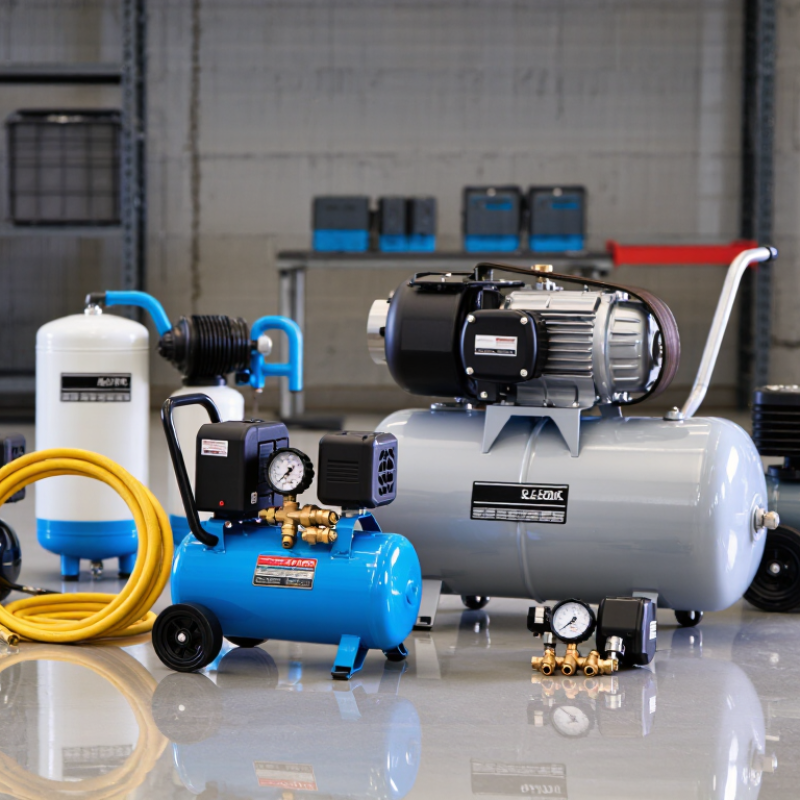
2026 Best Compressor Tools for Global Buyers
Compressor tools fall into several practical categories, each serving different operating conditions. Reciprocating compressors suit workshops, repair stations, and intermittent pneumatic tasks. Their compact structure helps smaller buyers manage limited floor space. Rotary screw compressors support continuous production lines, including packaging, assembly, and automated equipment. They deliver stable airflow for longer shifts, but usually require stronger maintenance planning.
Portable compressors are useful on construction sites, agricultural facilities, and mobile service vehicles. Oil-free models fit medical, laboratory, food-processing, and electronics applications where clean air matters. However, oil-free does not mean maintenance-free. Filters, drains, and cooling systems still need regular inspection. Keep it simple. Check the required pressure, airflow, tank size, and duty cycle before comparing prices.
Global buyers should also examine voltage, frequency, plug standards, climate conditions, and available technical support. A machine designed for a dry workshop may perform poorly in humid coastal environments. Noise matters too. In practical procurement reviews, low purchase prices often hide higher energy or spare-part costs. I once underestimated the importance of local service access; that assumption was costly. Buyers should request test data, efficiency information, safety documentation, and warranty terms in writing. They should also confirm whether the compressor can maintain performance during peak demand, not only under ideal factory conditions.
Compressor Tool Categories and Their Main Applications
The chart compares typical continuous air demand at 90 PSI. Values represent the midpoint of common operating ranges and are intended for preliminary compressor sizing.
Impact wrenches are widely used for vehicle assembly and maintenance; air ratchets support confined-space fastening; die and angle grinders are suited to precision finishing and surface preparation; air hammers handle cutting and chipping; pneumatic drills support production and repair work; and nailers or staplers are commonly used in construction and furniture assembly.
For global buyers, comparing compressor tools in 2026 requires more than checking maximum pressure. Start with working pressure, airflow, and duty cycle. Maximum pressure shows the upper limit, while airflow determines practical performance. A tool may reach 10 bar but still struggle with continuous spraying or drilling. Check liters per minute at the required pressure, not only the advertised intake rate.
Motor power matters, but it does not tell the whole story. Tank capacity affects recovery time and helps manage short demand peaks. For mobile work, weight, handle design, and wheel quality become important. Measure noise at the operator’s position, especially for indoor workshops. Voltage and frequency must match the destination market. Buyers should also verify plug requirements, thermal protection, moisture separation, and available replacement parts. These details often decide reliability after installation.
Tips: Request a test report under realistic conditions. Ask whether airflow was measured at the outlet. Confirm the continuous operating time, oil requirements, and maintenance intervals. A larger tank is not always better. It can increase weight and service needs. In my experience, specifications sometimes look precise but hide different testing methods. Compare identical measurement standards whenever possible. I would also leave a safety margin of about 15 percent for airflow demand, although the correct margin depends on the tool and workload.
In 2026, global buyers rarely need the biggest compressor tool. They need a reliable match for the worksite, power supply, and maintenance capacity. Start with the task. Nail guns, spray systems, tire service, and continuous factory lines demand different airflow patterns. A tool rated at 8 bar may still perform poorly if its delivered airflow is too low. Check pressure and CFM or L/min under load, not only catalog maximums. Good specifications matter.
Global conditions can change the match. A 50 Hz site may not accept a motor designed only for 60 Hz operation. Confirm voltage, phase, plug format, and starting current before shipment. In dusty workshops, enclosed motors and accessible filters can reduce downtime. Coastal users should examine corrosion protection, while high-altitude sites may need derating advice. Keep it practical. Ask for tested noise levels and duty cycle. A small receiver tank can smooth short bursts, but it cannot rescue an undersized pump.
Reliable purchasing also includes documentation. Request manuals, wiring diagrams, pressure-vessel records, spare-part lists, and inspection guidance in a usable language. Verify that safety markings and electrical approvals fit the destination market. Local service access often matters more than a lower invoice. I once saw a technically excellent unit sit idle because a simple intake filter took weeks to replace. That experience still shapes my advice: compare maintenance time, not just purchase price. Recheck assumptions with the operator who will use the tool every day. Their feedback may expose a requirement the spreadsheet missed.
For global buyers, the best compressor tools in 2026 are not judged by pressure alone. They must match international standards, workplace risks, and local compliance requirements. A practical evaluation should check ISO 1217 performance data, ISO 8573 air-quality classifications, and documented energy measurements. These records make comparisons more reliable.
Safety details deserve close attention. Look for pressure relief devices, emergency stops, guarded moving parts, thermal protection, and clear maintenance isolation points. Electrical systems should align with relevant IEC requirements, while control circuits may need functional safety evidence. Confirm the pressure vessel classification before purchase. Small details matter.
Compliance is not automatically global. A unit accepted in one market may require different markings, testing, manuals, or importer documentation elsewhere. Ask for declarations, inspection records, material certificates, and service procedures in the destination language. Check voltage, frequency, noise limits, and environmental conditions too. Humid sites need stronger corrosion protection.
I would not trust a polished datasheet alone. It may omit performance at high altitude, dirty intake conditions, or partial load. That omission can become an operating cost. Buyers should request independent test evidence and inspect the supplier’s technical support process. A careful checklist helps, but it is never perfect. Recheck assumptions with a qualified local specialist before installation.
A practical comparison of compressor equipment categories, operating characteristics, safety provisions, and international purchasing checks.
| Compressor or Tool Category | Typical Pressure Range* | Typical Capacity Profile | Suitable Applications | Relevant International Standards | Important Safety Features | Global Compliance Checks | Buyer Suitability |
|---|---|---|---|---|---|---|---|
| Reciprocating piston compressor | 6–30 bar(g), depending on configuration | Intermittent duty; low to medium flow; high pressure available from multi-stage designs | Workshops, maintenance tools, laboratories, small production lines | ISO 1217 for performance testing; ISO 4414 for pneumatic-system safety; IEC 60204-1 for electrical equipment where applicable | Pressure relief valve, thermal overload protection, belt or coupling guard, receiver drain, non-return valve, emergency stop | Confirm receiver-vessel certification, local pressure-equipment registration, electrical voltage/frequency, noise limits, and documentation language | Best for variable demand and high-pressure tasks with moderate operating hours |
| Rotary screw compressor | 5–15 bar(g) for common industrial packages | Continuous-duty operation; medium to high flow; fixed-speed or variable-speed control | Factories, assembly lines, packaging, general plant air | ISO 1217; ISO 8573 for compressed-air quality; ISO 13849-1 or IEC 62061 for safety-related control functions where applicable | High-temperature shutdown, oil-separator monitoring, minimum-pressure valve, automatic condensate management, guarded moving parts | Check declared free-air delivery at the required pressure, standby load behavior, motor efficiency, EMC performance, service access, and spare-parts availability | Strong all-round option for stable industrial demand and long duty cycles |
| Oil-free screw compressor | 7–10 bar(g) is common; higher-pressure versions are available | Continuous-duty operation; clean-air production without oil injection in the compression chamber | Food processing, pharmaceuticals, electronics, medical and laboratory air | ISO 8573-1 for air-purity classification; ISO 1217; ISO 22000 or sector-specific hygiene systems may apply to the complete process | Over-temperature protection, intake filtration, condensate control, pressure relief, hygienic materials where required, alarm logging | Request independent or factory test evidence for ISO 8573-1 oil class, particulate and water performance; verify downstream filters and dryer configuration | Preferred where product contamination risk is more important than lowest purchase cost |
| Scroll compressor | 7–10 bar(g) for common compact systems | Low to medium flow; quiet operation; modular duty using multiple compressor modules | Dental facilities, clinics, laboratories, light-duty production, office workshops | ISO 1217; ISO 8573 where clean air is specified; IEC 60204-1 for relevant electrical equipment | Low-pressure and high-temperature shutdown, module sequencing, receiver safety valve, acoustic enclosure, condensate drain | Confirm duty redundancy, medical-air requirements where applicable, electrical certification, sound-pressure measurement method, and filter replacement intervals | Best for low noise, clean air, compact installation, and moderate demand |
| Centrifugal compressor | Approximately 3–10 bar(g) in many plant-air systems | Very high, steady flow; efficient near design point; less suitable for highly fluctuating demand | Large process plants, utilities, chemical and manufacturing facilities | ISO 5389 for turbocompressor performance testing; ISO 1217 may apply to other compressor types; ISO 8573 for delivered air quality | Anti-surge control, vibration monitoring, overspeed protection, high-temperature trips, inlet filtration, emergency shutdown | Validate minimum stable flow, surge-control logic, foundation and piping loads, grid requirements, commissioning support, and specialist maintenance capability | Best for large facilities requiring continuous high-volume compressed air |
| Portable diesel-driven compressor | 7–35 bar(g), depending on drilling or construction configuration | Mobile operation; medium to high flow; independent of fixed electrical supply | Construction, road maintenance, mining, outdoor service work | ISO 1217; ISO 8528 principles may be relevant to engine-generator systems; local mobile-equipment, emissions, and road-towing rules apply | Engine overspeed shutdown, low-oil-pressure trip, coolant-temperature alarm, hot-surface guards, tow-brake system, emergency stop | Check engine-emission stage, fuel and exhaust requirements, towing approval, lifting points, IP protection, noise limits, and site-specific safety rules | Best for remote sites where mobility and autonomous operation are essential |
| Refrigerated air dryer | Typically designed for compressed air up to approximately 16 bar(g); verify model rating | Pressure dew point commonly around +3°C under rated conditions | General manufacturing and pneumatic tools where freezing conditions are not expected | ISO 7183 for compressed-air dryers; ISO 8573-1 for moisture classification; refrigerant regulations depend on destination market | High-condensation alarm, automatic drain, refrigerant pressure protection, bypass arrangement, fan and compressor overload protection | Confirm refrigerant type, leakage and recovery obligations, rated inlet temperature, flow derating, electrical conformity, and condensate disposal rules | Cost-effective moisture control for standard factory air systems |
| Desiccant air dryer | Often rated up to 16 bar(g) or higher; confirm pressure-vessel and valve ratings | Pressure dew point commonly −20°C, −40°C, or lower, depending on design and operating conditions | Outdoor pipelines, instrumentation, pharmaceuticals, electronics, cold or moisture-sensitive processes | ISO 7183; ISO 8573-1; pressure equipment requirements may apply to adsorption vessels and valves | High-pressure protection, tower switching interlock, purge-flow control, desiccant dust filtration, valve-cycle monitoring | Check specified dew point at actual flow, purge-air consumption, desiccant replacement plan, vessel certification, and cold-weather performance | Best when very dry air is required or ambient temperatures may approach freezing |
| Compressed-air filtration package | Commonly 7–16 bar(g); element and housing ratings must match system pressure | Removes particles, aerosols, and oil vapor when correctly selected and maintained | Protection of valves, instruments, spray equipment, food and pharmaceutical processes | ISO 8573-1 for air-quality classes; ISO 12500 series for filter testing; ISO 8573-5 may be relevant to oil-vapor measurement | Differential-pressure indicator, automatic drain, correctly rated housing, element-retention mechanism, safe depressurization | Specify target purity class, flow at operating pressure, inlet temperature, pressure drop, test method, and replacement indicator | Essential whenever air quality, equipment reliability, or product protection is critical |
International purchasing checklist
Verify the applicable edition of each standard, destination-country electrical and pressure-equipment rules, rated performance at the required pressure, voltage and frequency, noise and emissions limits, conformity documentation, installation instructions, maintenance requirements, spare-parts support, and the complete compressed-air treatment chain. Pressure ranges and dew points are indicative industry values; the supplier’s certified rating and local regulations take precedence.
For global buyers, compressor selection starts with air demand, not headline horsepower. Measure flow, pressure, duty cycle, and air quality at the actual point of use. The U.S. Department of Energy’s Improving Compressed Air System Performance guide reports that compressed air can consume about 10% of industrial electricity. Oversizing therefore creates a costly, permanent mistake. A flow meter and data logger reveal real demand. A small regret today is cheaper than years of unloaded running.
Shipping requires equal attention. Confirm voltage, frequency, control-panel standards, lifting points, and spare-part availability before payment. Request a wooden crate suitable for long-distance sea transport, with moisture protection and shock indicators. Check the packed dimensions, gross weight, and customs documents carefully. One missing certificate can delay installation for weeks. Incoterms also change insurance and delivery responsibilities, so buyers should obtain written clarification.
Maintenance planning protects the purchase. The Compressed Air Challenge best-practice guide notes that leaks may waste 20–30% of compressor output in poorly maintained systems. Use an ultrasonic leak detector during scheduled inspections. Replace filters according to pressure-drop readings, not habit. Monitor oil temperature, vibration, dew point, and running hours. ISO 8573-1 helps define compressed-air purity requirements, especially for food, electronics, and pharmaceutical applications. These targets should appear in the purchase contract. Some buyers focus too heavily on initial price. That is understandable, but incomplete. Availability of local technicians and critical seals may matter more during a shutdown.
sale@harbertpump.com,
sale@harbertpump.com